Matthew 11:28 Explained: "Come Unto Me," a Devotional for Heavy Burdens
By Prince Oye · November 28, 2026
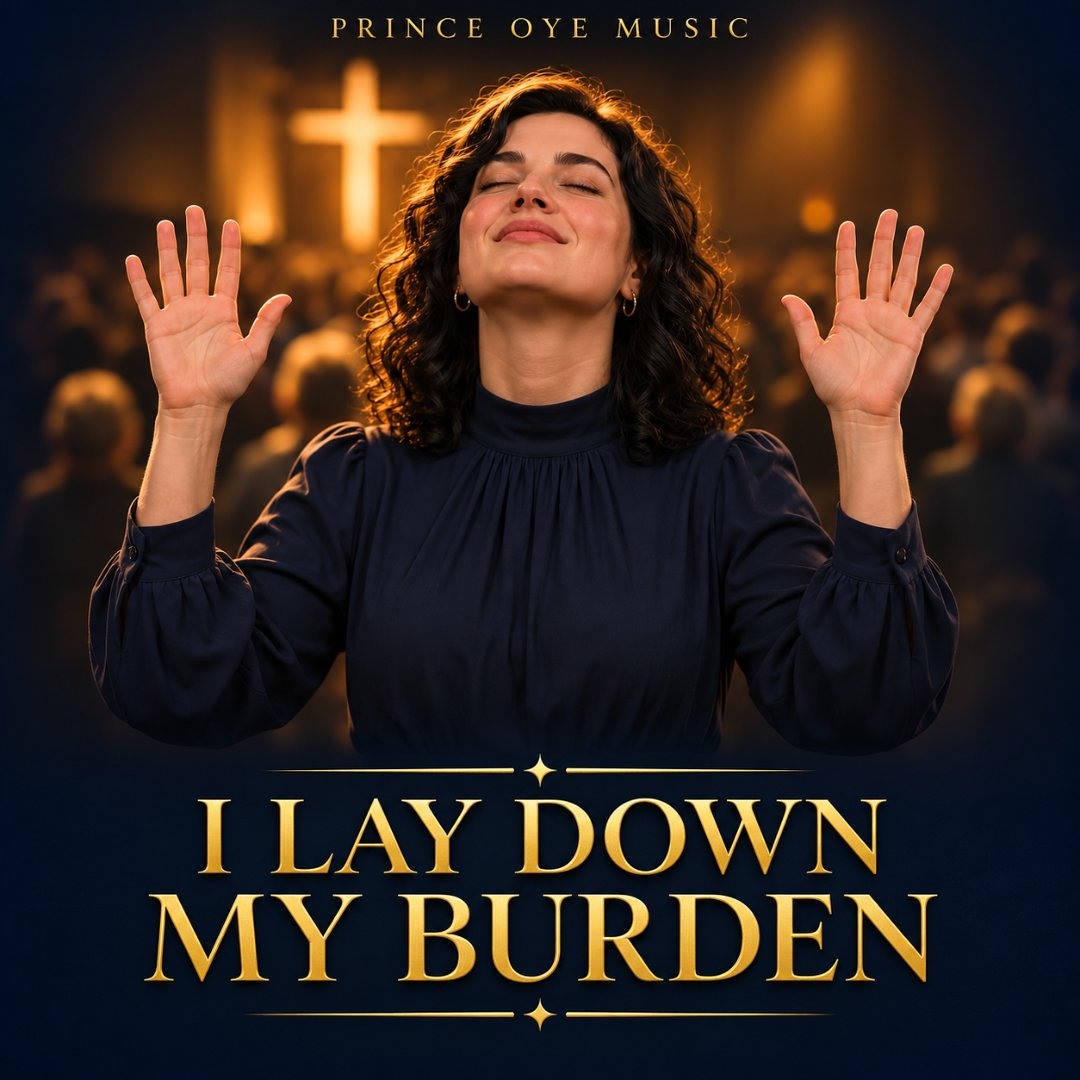
Some Bible verses are comforting because they are familiar, and some are comforting because they arrive at exactly the right hour. Matthew 11:28 is both. It is often the first verse people think of when they are exhausted: tired from work, from grief, from caring for others, from trying to hold their lives together, or from the quiet strain of carrying something that no one else can see.
This article is a devotional and a study. We will read the passage in its full context, look closely at the words Jesus chose, explore the meaning of the "yoke," ask what kind of rest He is promising, and finish with a simple way to bring your own burdens to Him in prayer, along with worship songs for heavy seasons from Prince Oye Music.
All scripture is quoted from the King James Version (KJV).
The passage
"Come unto me, all ye that labour and are heavy laden, and I will give you rest. Take my yoke upon you, and learn of me; for I am meek and lowly in heart: and ye shall find rest unto your souls. For my yoke is easy, and my burden is light."
— Matthew 11:28–30 (KJV)
Three verses, one invitation. Let us take them slowly.
The context: who is speaking, and to whom?
It is easy to treat these verses as a freestanding card to hang on a wall. But they are part of a larger moment in Matthew's Gospel. Just before this, Jesus has been speaking about people who have rejected both John the Baptist and Himself, and He thanks the Father for revealing truth to the humble rather than to the self-satisfied:
"At that time Jesus answered and said, I thank thee, O Father, Lord of heaven and earth, because thou hast hid these things from the wise and prudent, and hast revealed them unto babes. Even so, Father: for so it seemed good in thy sight. All things are delivered unto me of my Father: and no man knoweth the Son, but the Father; neither knoweth any man the Father, save the Son, and he to whomsoever the Son will reveal him."
— Matthew 11:25–27 (KJV)
Notice the "babes," the humble, the ones who know they need help. Then, in the very next breath, comes the invitation to "all ye that labour and are heavy laden." The Savior who says "no man knoweth the Son, but the Father" is the same one who says "come unto me." The One with the greatest authority makes the gentlest invitation.
This tells us something about the kind of person Jesus is. He is not a distant ruler who hands down instructions. He is a king who calls the tired to come to Him personally.
Looking closely at the words
"Come unto me"
The invitation is not "come to church" or "come to your senses," though both can be good things. It is "come unto me." Rest is found in a person, not a program. The Bible's repeated invitations all work this way:
"All that the Father giveth me shall come to me; and him that cometh to me I will in no wise cast out."
— John 6:37 (KJV)
"In the last day, that great day of the feast, Jesus stood and cried, saying, If any man thirst, let him come unto me, and drink."
— John 7:37 (KJV)
Over and over, Jesus points to Himself as the answer to human need, and promises that no one who comes will be turned away.
"All ye that labour and are heavy laden"
The two phrases describe two different kinds of weariness. Scholars point out that the Greek word for "labour" (kopiaō) describes active toil, the tiredness of working hard, while "heavy laden" (phortizō) describes someone who has been loaded down with a burden placed on them. In other words, Jesus addresses both the person who is weary from what they are doing and the person who is weary from what they are carrying.
That is a helpful distinction, because our own tiredness comes in both forms:
- The tiredness of labour: long hours, caring for children or aging parents, ministry, studying, trying to earn a living, trying to do the right thing again and again.
- The tiredness of load: grief, guilt, a diagnosis, a strained marriage, financial pressure, the sin or sorrow of someone you love, and the private worry that follows you into bed at night.
Notice the word "all." There is no category of tiredness that is excluded, and no one is told to wait until they have cleaned themselves up first.
"I will give you rest"
The Greek word for "rest" in this verse (anapausō) means to give relief or refreshment, to cause someone to stop and be restored. Jesus does not say, "I will tell you how to work harder," or "I will show you the minimum you can get away with." He says, "I will give you rest." Rest is something He gives. It is not something we earn.
It helps to see what that rest is not. It is not escape from responsibility, and it is not always a change of circumstance. A parent still has children to raise, and a worker still has a job to do. The rest Jesus gives is deeper than either: rest for the soul, as verse 29 says.
The yoke: "take my yoke upon you"
At first glance, the sentence seems like a contradiction. A person who is already weighed down is told to take a yoke. But a yoke in the ancient world was not only a farming tool. It was also a familiar picture for submitting to a teacher.
A teacher's yoke
In Jewish thought of the time, "taking a yoke" could describe submitting to a teacher and walking in his way of life. The wisdom book Sirach, which was widely read in that period, invites its readers to put their necks under wisdom's yoke and to receive instruction. When Jesus says "take my yoke upon you, and learn of me," He is using the same imagery. He is saying: become My disciple. Walk with Me. Learn My way.
The yoke that fits
Jesus says "my yoke is easy." The Greek word translated "easy" (chrēstos) is more than "not difficult." It carries the sense of kind, good and well-made, a thing that is useful and fits well. Jesus was known in His hometown as "the carpenter" (Mark 6:3), so it is natural to hear in His words the picture of a well-made tool, though the passage itself does not say so. Whatever the picture, the point is that His way of life is made to be walked.
Then He adds, "my burden is light." This is not a promise that following Christ costs nothing. Elsewhere He speaks of taking up a cross. It is a promise that He Himself shares the load and that His way, unlike the many heavy rules people had piled on others, is one that people were made to walk.
The heavy yokes of the world
Contrast this with how scripture describes the other yokes people carry. Jesus says of some religious teachers of His day:
"For they bind heavy burdens and grievous to be borne, and lay them on men's shoulders; but they themselves will not move them with one of their fingers."
— Matthew 23:4 (KJV)
And in Acts 15:10, Peter calls the attempt to place the demands of the Law on Gentile believers "a yoke upon the neck of the disciples, which neither our fathers nor we were able to bear." Many of us know people, perhaps ourselves, who have been exhausted by religion that was all demand and no mercy. Jesus does not offer that. He offers Himself.
"Learn of me; for I am meek and lowly in heart"
The reason the yoke is light is given in verse 29: the One who calls us is "meek and lowly in heart." He is not harsh, and He is not impatient. The strongest person in the universe describes Himself as gentle. You do not need to be afraid of coming to Him with your exhaustion.
"Ye shall find rest unto your souls"
This phrase is an echo of an Old Testament verse. In Jeremiah 6:16, God says to His people, through the prophet:
"Thus saith the LORD, Stand ye in the ways, and see, and ask for the old paths, where is the good way, and walk therein, and ye shall find rest for your souls. But they said, We will not walk therein."
— Jeremiah 6:16 (KJV)
The invitation in Matthew sounds like an answer to that old refusal: "We will not walk therein." Jesus is the good way, and in Him we find the rest that was promised. The rest of the soul is the rest of knowing that we are known, forgiven and held. It is the rest described in Hebrews:
"There remaineth therefore a rest to the people of God. For he that is entered into his rest, he also hath ceased from his own works, as God did from his. Let us labour therefore to enter into that rest, lest any man fall after the same example of unbelief."
— Hebrews 4:9–11 (KJV)
What this passage is and is not saying
Honesty matters when we read comforting verses, so here are a few gentle clarifications.
- It is a real invitation to everyone who is tired. You do not have to be a perfect believer to come. You only have to come.
- It does not promise that life will be easy. Jesus promises rest, not the removal of every difficulty.
- It does not replace practical help. Rest for the soul and practical rest go together. If you are exhausted, God may also be calling you to sleep, to eat, to ask for help, to see a doctor, or to talk with a counselor. If you are experiencing persistent low mood, panic or thoughts of harming yourself, please reach out to a doctor or a mental health professional, or call or text 988 in the United States.
- It is personal. The verbs are "come," "take" and "learn." This is a relationship, not a technique.
A ten-minute "come unto me" prayer
If you would like a simple way to respond to this passage, try this practice. It takes about ten minutes and can be done at a desk, in a parked car or on the edge of your bed.
1. Come (2 minutes). Sit quietly and say aloud, "Jesus, I am coming to You." Do not try to feel anything in particular. Simply arrive. 2. Name the weight (3 minutes). Say or write what you are carrying. It helps to sort it into two lists: labour (what I am doing) and load (what I am carrying). Be specific. 3. Hand it over (2 minutes). Pray the words of scripture:
"Casting all your care upon him; for he careth for you."
— 1 Peter 5:7 (KJV)
"Cast thy burden upon the LORD, and he shall sustain thee: he shall never suffer the righteous to be moved."
— Psalm 55:22 (KJV)
4. Take His yoke (2 minutes). Ask, "What does it look like to walk with You today instead of in my own strength?" Listen. It might be a small adjustment: ask someone for help, say no to something, take a walk, or forgive someone. 5. Receive (1 minute). Close by reading Matthew 11:28 slowly, once, and saying "Thank You."
For a week of practice, repeat this daily. Pair it with a time of quiet music if you find it helps you settle.
Other scriptures about rest
- Exodus 33:14, "My presence shall go with thee, and I will give thee rest."
- Psalm 62:1, "Truly my soul waiteth upon God: from him cometh my salvation."
- Psalm 116:7, "Return unto thy rest, O my soul; for the LORD hath dealt bountifully with thee."
- Psalm 127:2, God "giveth his beloved sleep."
- Mark 6:31, where Jesus tells His busy disciples, "Come ye yourselves apart into a desert place, and rest a while."
- Isaiah 40:28–29, the God who "fainteth not, neither is weary" gives power to the faint.
If sleep is where your burdens press hardest, read Bible Verses for Sleep and Anxiety and Christian Sleep Music With Scripture.
Worship songs for heavy burdens from Prince Oye Music
Worship gives words to the exchange this passage describes: we come, we lay something down, we take hold of Him. These songs from Prince Oye Music were written for that moment. The descriptions follow the song pages.
Songs of laying burdens down
- I Lay Down My Burden is a worship song for prayer time and quiet reflection.
- I Lay My Burdens Down is peaceful gospel worship from the Sleep Music collection, Vol. 3, for quiet prayer, evening reflection and restful listening.
- My Burdens Drift Away is track 3 on Midnight Surrender: Soaking Worship Vol. 5, a gospel worship selection for prayer, Bible meditation and quiet devotion with a focus on surrender, trust in Jesus and the peace of God.
- Nothing Left to Carry is track 6 on Midnight Surrender: Soaking Worship Vol. 12, made for prayer, Bible meditation and quiet devotion.
Songs for a heavy heart
- When My Heart Is Heavy is gospel worship for prayer, quiet time and rest from the set Peace in Your Presence.
- Rest for My Anxious Heart is gospel worship for prayer, quiet time and rest, also from Peace in Your Presence. Listen to the whole set at Peace in Your Presence | Gospel Worship for Prayer & Rest.
A long session for heavy burdens
Midnight Surrender | Soaking Worship for Heavy Burdens & Anxiety is a nearly two-hour soaking worship session on YouTube. Soaking worship is slow, repetitive worship meant for sitting quietly in God's presence, and this session is designed for exactly the kind of tiredness that Matthew 11:28 addresses. To learn more about the approach, read What Is Soaking Worship?.
For a night session more focused on sleep, listen to this one:
Frequently asked questions
What does Matthew 11:28 mean?
It is Jesus' invitation to everyone who is weary from work or weighed down by burdens to come to Him and receive rest. The rest is both a relief of the soul and the beginning of a life of learning from Him.
What does "heavy laden" mean in the Bible?
"Heavy laden" describes someone who has been loaded down with a burden, whether a physical load, the weight of sin and guilt, or the weight of the life circumstances pressing upon them. In context it also refers to the heavy religious demands that some leaders placed on people.
What does "take my yoke upon you" mean?
A yoke is a wooden beam that joins animals for work, and in Jewish teaching it also described becoming a teacher's disciple. Jesus invites us to take His yoke by following and learning from Him, and He promises that His way is kind and His burden light.
Does Jesus promise to remove all our burdens?
The passage promises rest and shared burdens, not the removal of every difficulty. Elsewhere the Bible invites us to cast our cares on Him because He cares for us (1 Peter 5:7), and it promises that if we do, "he shall sustain thee" (Psalm 55:22).
How do I find rest in Jesus when I am exhausted?
Come to Him honestly in prayer, name what you are carrying, hand it over, and ask Him to show you how to walk with Him in a way that fits your life. Also take care of your body: sleep, eat, and ask for help when you need it.
A closing prayer
Lord Jesus, I come to You just as I am, tired from what I do and heavy with what I carry. I do not have a neat list or a polished prayer. I only have my weariness, and You said to bring it. I lay it down now. Take what I cannot carry. Teach me to walk with You, gentle and lowly, in a way that fits the person You made me to be. Give me the rest that only You can give, and let it reach all the way to my soul. Amen.
Come as you are. If you would like to keep worshipping, explore more videos from Prince Oye Music.