Amapiano Gospel: How the South African Sound Became Worship Music
By Prince Oye · November 28, 2026
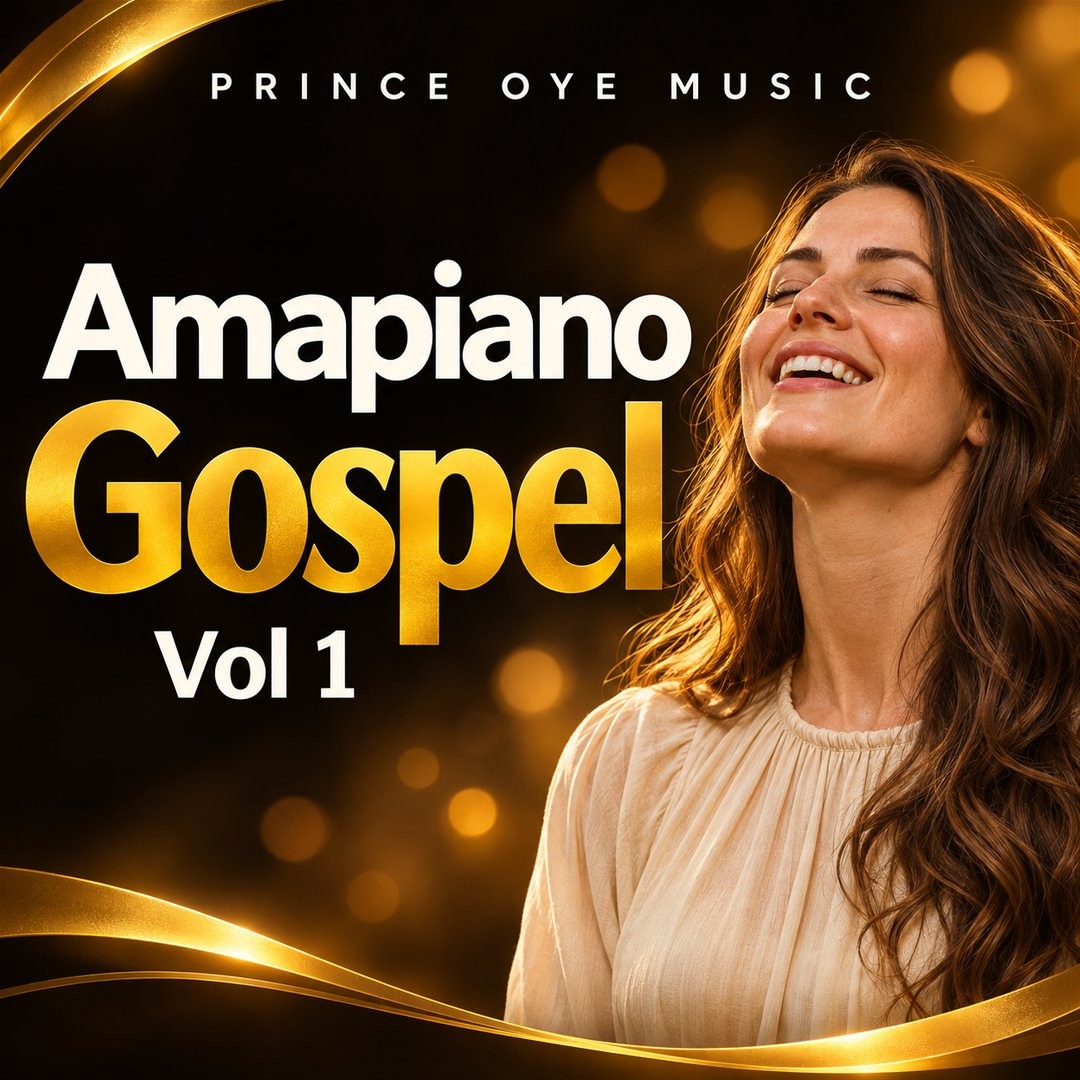
If you have heard a worship song lately that sits on a deep, bouncing bass, a warm piano figure, and a chorus you can dance to, there is a good chance you have already met amapiano gospel. The sound began in South Africa, moved through clubs, taxis and phones, and then, as often happens with a rhythm that gets into a culture, it found its way into church.
This article is a simple guide. We will look at where amapiano came from, what makes the sound recognizable, how gospel artists have taken it up, what the Bible says about praise that moves the body, and where to start listening, including the twenty-song album Amapiano Gospel Vol 1 by Prince Oye Music.
A word up front: amapiano is a living, contested tradition with many pioneers, and gospel amapiano is still taking shape. What follows is an introduction, not a complete history.
All scripture is quoted from the King James Version (KJV).
What is amapiano?
Amapiano is a style of house music that grew in the townships of Gauteng, South Africa, in the 2010s. The name is usually explained as a mix of the Nguni prefix ama- with the English word "piano," so that it means, roughly, "the pianos." The piano is important, but the signature sound that most listeners notice first is the log drum: a deep, punchy, synthesized bass that also behaves like a drum, playing bouncing, off-beat patterns under a steady house kick.
The rest of the palette often includes jazz-inflected chords, shuffling percussion, warm pads, and vocals that can be sung, spoken or chanted. The tempo is typically unhurried compared with many club styles, which is one reason the music can feel both festive and relaxed at the same time.
Where it came from
The exact birthplace is still argued about, and it is honest to say so. Pretoria areas such as Mamelodi and Atteridgeville, and Johannesburg townships such as Soweto, Alexandra and Katlehong, all have claims. Most accounts agree that the sound grew in more than one place at once, spread by young DJs and producers at taverns, car washes and house parties, and shared on phones, USB sticks and download sites long before radio or global streaming services took it up.
Its roots are usually traced through a few South African traditions:
- Kwaito, the slowed, chant-heavy house style that became a voice of post-apartheid youth in the 1990s.
- Deep house and the piano-led experiments of the early 2010s.
- Jazz and gospel harmonies, which many South African listeners grew up hearing at home and in church. Those traditions help explain the chord voicings and the call-and-response singing that later made the jump into worship so natural.
By about 2019, amapiano had become a dominant sound in South African youth culture. Producers and DJs such as Kabza De Small and DJ Maphorisa, often called the Scorpion Kings, were among those whose projects helped carry it into the mainstream. Other producers are widely credited with shaping the log-drum language of the genre. This article cannot name every pioneer, and it should not pretend to settle debates that South African musicians are still having among themselves.
How the sound became worship music
Gospel amapiano, sometimes called piano gospel, is what happens when that groove is put under Christian words: praise, testimony, gratitude, and the kind of refrains a congregation can sing without a booklet.
It did not appear overnight. As amapiano became the everyday sound of a generation, church musicians and gospel singers began to experiment with it, recasting praise choruses over mid-tempo, log-drum-driven tracks. During and after the early 2020s, live-streamed services and short-form video helped the trend travel. Artists and choirs in South Africa, and then in other African countries and in the diaspora, cut singles and medleys in the style.
A few widely discussed South African examples, from the popular side of the sound, include Kabza De Small's collaborations in a gospel-leaning lane, such as "Imithandazo" and "Nasempini," the latter featuring the Spirit of Praise gospel choir with DJ Maphorisa and others. Those records are useful as signposts, not as a canon. The church-level story is broader: youth services, praise parties, and ordinary Sundays in which a familiar log-drum pattern is carrying a familiar name, the name of Jesus.
If you already know Nigerian praise culture, or the Black church praise break, the family resemblance will be clear. A repeated chorus, a rising energy, a testimony, and a room that has begun to move are older than any one genre. For more on that older stream, see Gospel Praise Break Songs and Nigerian Worship Songs 2026.
Is dancing praise biblical?
Some listeners hear a dance-floor rhythm and wonder whether it belongs in worship. The Bible does not require every believer to dance, and it does call for order and love in the gathering (1 Corinthians 14:40). It also, quite plainly, invites praise that uses the body, the voice and a wide range of instruments.
"Let them praise his name in the dance: let them sing praises unto him with the timbrel and harp."
— Psalm 149:3 (KJV)
"Praise him with the sound of the trumpet: praise him with the psaltery and harp. Praise him with the timbrel and dance: praise him with stringed instruments and organs. Praise him upon the loud cymbals: praise him upon the high sounding cymbals."
— Psalm 150:3–5 (KJV)
Psalm 150 names trumpet, psaltery, harp, timbrel, dance, stringed instruments, organs and cymbals, and then closes the book of Psalms with a sentence that leaves very little out:
"Let every thing that hath breath praise the LORD. Praise ye the LORD."
— Psalm 150:6 (KJV)
The stories match the songs. After the crossing of the Red Sea, Miriam took a timbrel and the women followed her with timbrels and dances (Exodus 15:20–21). David "danced before the LORD with all his might" when the ark came to Jerusalem (2 Samuel 6:14–15). The psalms call for a joyful noise, for clapping hands, and for a new song:
"O clap your hands, all ye people; shout unto God with the voice of triumph."
— Psalm 47:1 (KJV)
"Make a joyful noise unto the LORD, all the earth: make a loud noise, and rejoice, and sing praise."
— Psalm 98:4 (KJV)
"Sing unto him a new song; play skilfully with a loud noise."
— Psalm 33:3 (KJV)
None of this is an argument that every church must adopt amapiano, or that volume and movement are the only faithful forms of praise. Quiet reverence is biblical too. It is an argument that a rhythm which gets into the feet is not, by itself, unholy. The question is always the same: does the song help people tell the truth about God, and does it build up the body?
Colossians 3:16 gives a good test for any style, old or new:
"Let the word of Christ dwell in you richly in all wisdom; teaching and admonishing one another in psalms and hymns and spiritual songs, singing with grace in your hearts to the Lord."
— Colossians 3:16 (KJV)
If the word of Christ is dwelling in the song, if it teaches and admonishes, if it is sung with grace in the heart to the Lord, the instrumentation can be a piano and a log drum as surely as it can be an organ and a choir.
A few words of balance
- Keep the groove holy. A dance rhythm can serve praise, or it can become the point. The title of one of the songs below, "Keep This Groove Holy," is a useful prayer: treat the floor as a place of worship, not only a place to be seen.
- Let the words lead. If you cannot hear the testimony because the mix is only a beat, turn it down, or choose a mix that leaves room for the voice.
- Honor the source. Amapiano comes from South African townships and from named artists and producers. Enjoying the sound is one thing. Erasing the people who made it is another.
- Make room for more than one expression. A church, a family or a playlist can hold a praise-party track and a quiet soaking song in the same week. God is not limited to one tempo.
Where to start: *Amapiano Gospel Vol 1* by Prince Oye Music
Amapiano Gospel Vol 1 is a 20-song album by Prince Oye Music, released November 23, 2026. Prince Oye is an American Nigerian gospel and worship artist based in Houston, Texas, and this set takes the South African-rooted sound into a catalog of praise, testimony and dance worship. The descriptions below follow the official song pages.
Songs that get the room moving
- No Last Song Tonight is a praise-party song about worship that outlasts the clock, with log drums, a sax hook and a chant chorus that declares the night is open and "we can go till morning."
- The Praise Hit The Floor is a dance praise song about worship that starts in the chest and finds the feet, with log drums and a whistle chant.
- Praise Walked In With Me is about bringing worship into the room before the music even starts.
- Keep This Groove Holy is a dance worship song about treating every step as praise for the Lord. The chorus says, "this floor is sacred, every step is worship, and we keep this groove holy."
- Joy Held The Room is a praise song about joy taking the center and refusing to leave, with a joyful call-and-response chorus.
Songs of testimony and relief
- The Weight Came Off is about the moment God lifts a burden you could no longer carry. The chant says you can stand up straight, and "I don't carry that."
- I Came With A Story is a testimony song about walking in ready to tell what God has done.
- It's Showing On Me is a testimony song about a change so clear that every room can see it.
- He Showed Up For Me is about the God who walks in when options run out.
- I Stepped Into Morning is about walking out of midnight into a new day. The chorus declares that the night is behind me, and this is a new day.
Songs of promise, closeness and thanks
- He Still Keeps His Word is a worship song about standing on a promise that never slips out of place. The chorus says that people change and seasons lose their way, but He still keeps His word.
- He Closed The Distance is about a God who is not far off: "He crossed the space, He's closer than I knew."
- Goodness Got Here First is about kindness already waiting before the ask, with the line that "the worry was late."
- Thankful In The Middle is a thanksgiving song about gratitude before the ending comes: "I won't wait for perfect, I won't save it for later."
- I Kept The Song is a warmer, jazz-piano-led worship song about holding onto praise when the night is long and strength is thin: "the dark couldn't take it, and I kept the song."
- Favor Won't Quit, I Walk In The Open, Head Up, Hands High, Fear Lost My Address and It's Open Now carry the same language of freedom, courage and a door that will not lock again.
If you want a quieter companion to this album, go from the dance floor to the prayer room with Deep Worship Songs for Prayer or What Is Soaking Worship?.
How to use amapiano gospel well
1. Know why you are playing it. A Saturday cleanup, a drive to church, a youth night, or a living-room dance of thanks are all fitting. It is usually the wrong tool for a hospital quiet room or a grief-soaked midnight, unless a particular testimony track is meeting you there. 2. Sing the refrain. These songs are built on short, repeatable lines. Learn one chorus and say it as a prayer: "He still keeps His word." "The weight came off." "Keep this groove holy." 3. Tell the story. Amapiano gospel, like a praise break, is at its best when it is carrying a testimony. After a song, name one thing God has done. 4. Leave room for silence after. Joy does not have to be padded with more noise. A short quiet after a loud praise is a biblical instinct.
The last book of the Bible imagines worship as a gathering no single style can contain:
"After this I beheld, and, lo, a great multitude, which no man could number, of all nations, and kindreds, and people, and tongues, stood before the throne, and before the Lamb, clothed with white robes, and palms in their hands; And cried with a loud voice, saying, Salvation to our God which sitteth upon the throne, and unto the Lamb."
— Revelation 7:9–10 (KJV)
A South African groove, sung in Houston or Lagos or London, is a small foretaste of that picture: many places, one Lord.
Frequently asked questions
What is amapiano gospel?
It is Christian praise and worship music that uses the sounds of amapiano, a South African house style known for log-drum bass, piano figures and a mid-tempo, danceable groove, under lyrics of testimony, gratitude and praise.
Where did amapiano come from?
It grew in the townships of Gauteng, South Africa, in the 2010s. The exact starting point is still debated. The name is commonly explained as "the pianos."
Is it all right to dance to worship music?
The Bible includes dance, clapping and many instruments in its picture of praise, and it also calls for order and love in the church. Dancing is permitted; it is not required. The heart of the matter is whether the song helps people honor God.
What does a log drum sound like?
In amapiano it is a deep, synthesized bass-and-drum sound, more felt than a regular bass guitar, playing bouncy patterns against a steady kick. It is one of the easiest ways to recognize the style.
Where should I start with Prince Oye Music's amapiano songs?
Begin with the album Amapiano Gospel Vol 1. If you want one track, try "No Last Song Tonight" for a praise-party energy, "The Weight Came Off" for testimony, or "Keep This Groove Holy" for a reminder of what the dance is for.
A closing prayer
Lord, we thank You that every language, every people and even every rhythm can be turned toward Your praise. Thank You for the musicians who first found this sound, and for every singer who has put Your name in it. Teach us to keep the groove holy, to tell the truth about what You have done, and to remember that the joy is Yours before it is ours. Let everything that hath breath praise the LORD. Amen.
If you would like to keep worshipping, explore more videos from Prince Oye Music.