Worship Songs About Trusting God When You Can't See the Way
By Prince Oye · November 28, 2026
Most of us can trust God in theory. The difficulty comes when there is a decision with no clear answer, a job that has disappeared, a diagnosis that has not been explained, a child who is far from home, or a road that simply does not show its next turn. In those moments the words "trust God" can sound like a slogan. What we want is a map. What God often gives instead is Himself.
This article is for anyone standing in that place. We will look at what the Bible means by trust, open the scriptures that speak most directly to uncertainty, and offer some honest, practical help for trusting God one step at a time. Along the way we will share worship songs, including songs by Prince Oye Music written for exactly this kind of season: "Lead Me Without the Map," "He Goes Before Us," "I Will Trust" and others.
All scripture is quoted from the King James Version (KJV).
What does it mean to trust God?
In the Bible, trust is not a mood. It is a decision to lean our weight on someone. The Hebrew word most often translated "trust" in the Old Testament carries the idea of feeling safe and secure because of the one you are relying on. It is the picture of a person who sits back in a sturdy chair rather than perching on the edge of it.
That matters for two reasons. First, it means that trust is something we can choose, even when our feelings are shaky. Second, it means that trust is always trust in someone. When we cannot see the way, we are not asked to trust our own ability to figure things out, or to trust that everything will work out the way we want. We are asked to trust the character of God: that He is good, that He is faithful and that He knows the way.
The most famous verse on the subject says it plainly:
"Trust in the LORD with all thine heart; and lean not unto thine own understanding. In all thy ways acknowledge him, and he shall direct thy paths."
— Proverbs 3:5–6 (KJV)
Notice the pairing of "trust" and "lean not." We are tempted to hold on to God with one hand and to our own understanding with the other. The verse invites us to let go of the second hand. And look at the promise: not "he shall explain your path" but "he shall direct thy paths." God's promise is direction, not a full briefing.
Trust is not the absence of fear
A common misunderstanding is that trusting God means feeling calm. The Bible does not say that. Here is how David puts it when he was in danger:
"What time I am afraid, I will trust in thee. In God I will praise his word, in God I have put my trust; I will not fear what flesh can do unto me."
— Psalm 56:3–4 (KJV)
"What time I am afraid" does not mean "if I am ever afraid." It means "whenever I am afraid." David does not wait until the fear is gone to trust. He trusts in the middle of it. That is encouraging, because it means you do not have to manufacture peace before you can begin. You can say, "Lord, I am afraid, and I choose to trust You," and that is real faith.
The same honesty runs through the Psalms. Writers ask "how long?" and "why?" and still end by turning back to God. Asking God honest questions is not the opposite of trust. Walking away from Him is.
Scriptures for when you cannot see the way
A lamp for the next step
"Thy word is a lamp unto my feet, and a light unto my path."
— Psalm 119:105 (KJV)
Think about what a lamp does, especially an oil lamp in the ancient world. It does not light up the whole road. It shows a few steps ahead of your feet. God usually guides the same way. He gives light for the step in front of us and asks us to take it, and then the next one appears. If you are waiting to see the whole route before you start, you may be waiting for a kind of light He does not usually give.
He leads the blind by ways they did not know
"And I will bring the blind by a way that they knew not; I will lead them in paths that they have not known: I will make darkness light before them, and crooked things straight. These things will I do unto them, and not forsake them."
— Isaiah 42:16 (KJV)
This verse is full of promises that begin with "I will": I will bring, I will lead, I will make darkness light, I will not forsake. Notice also that the people in the verse are "blind" and walking in paths they have "not known." God does not wait for them to become sighted. He walks with them in the dark and makes it light for them as they go.
The LORD goes before you
"And the LORD, he it is that doth go before thee; he will be with thee, he will not fail thee, neither forsake thee: fear not, neither be dismayed."
— Deuteronomy 31:8 (KJV)
This was spoken to Israel as Moses handed leadership to Joshua. The nation was about to cross into a land that none of them but Joshua and Caleb had seen. The promise they were given was not "I will give you a map" but "he it is that doth go before thee." One of the most comforting facts about an unknown road is that God is already on it. Whatever room you are about to walk into, a meeting, a hospital corridor, a hard conversation, He is already there.
He will instruct and teach you
"I will instruct thee and teach thee in the way which thou shalt go: I will guide thee with mine eye."
— Psalm 32:8 (KJV)
"And thine ears shall hear a word behind thee, saying, This is the way, walk ye in it, when ye turn to the right hand, and when ye turn to the left."
— Isaiah 30:21 (KJV)
God guides in several ways: through His word, through His Spirit, through wise counsel and through circumstances. Isaiah's picture of a voice behind you saying "This is the way" is a promise of timely direction, often given when we have begun to move, "when ye turn to the right hand, and when ye turn to the left."
A prayer for guidance
"Cause me to hear thy lovingkindness in the morning; for in thee do I trust: cause me to know the way wherein I should walk; for I lift up my soul unto thee."
— Psalm 143:8 (KJV)
This is a lovely prayer for the beginning of a day when the future is uncertain. Notice three requests: hear Your lovingkindness, show me the way, and I lift my soul to You. The first request comes before the second. Before we ask for directions, we ask to remember that we are loved.
Perfect peace for a mind that stays
"Thou wilt keep him in perfect peace, whose mind is stayed on thee: because he trusteth in thee. Trust ye in the LORD for ever: for in the LORD JEHOVAH is everlasting strength:"
— Isaiah 26:3–4 (KJV)
Isaiah's "perfect peace" belongs to a mind "stayed" on God, the picture of a mind that leans, a mind that is propped up and held. The reason given is simple: "because he trusteth in thee." You can read more about this verse in Bible Verses for Strength and Peace of Mind.
Three pictures of trusting when the way is unclear
Abraham, who went "not knowing"
"Now the LORD had said unto Abram, Get thee out of thy country, and from thy kindred, and from thy father's house, unto a land that I will shew thee:"
— Genesis 12:1 (KJV)
The destination in that command is simply "a land that I will shew thee." The writer of Hebrews later comments on how Abraham responded:
"By faith Abraham, when he was called to go out into a place which he should after receive for an inheritance, obeyed; and he went out, not knowing whither he went."
— Hebrews 11:8 (KJV)
"Not knowing whither he went" is the definition of walking by trust. Abraham did not have a map. He had a promise and a Promiser.
Israel and the pillar of cloud
"And the LORD went before them by day in a pillar of a cloud, to lead them the way; and by night in a pillar of fire, to give them light; to go by day and night:"
— Exodus 13:21 (KJV)
Israel's guidance in the wilderness was not a route printed in advance. It was a presence, a cloud by day and a fire by night, which they followed. When it moved, they moved. When it stopped, they stopped. This reminds us that God's guidance is relational. He wants us to follow Him, not just a set of directions.
Peter and a word that comes later
Jesus says something to Peter at the foot-washing that fits many of our seasons:
"Jesus answered and said unto him, What I do thou knowest not now; but thou shalt know hereafter."
— John 13:7 (KJV)
"Thou knowest not now; but thou shalt know hereafter." There are things we will understand only in hindsight. Some we may not understand until we are with Him. Trust does not require us to understand now.
When your plans and God's plans seem to differ
"A man's heart deviseth his way: but the LORD directeth his steps."
— Proverbs 16:9 (KJV)
"For my thoughts are not your thoughts, neither are your ways my ways, saith the LORD. For as the heavens are higher than the earth, so are my ways higher than your ways, and my thoughts than your thoughts."
— Isaiah 55:8–9 (KJV)
These two passages do not tell us to stop planning. They tell us to plan with humility. We make our plans, and God directs the steps. And when His direction differs from ours, Isaiah reminds us that His thoughts and ways are higher. That is not an insult to our intelligence. It is an invitation to a wider view.
How to trust God one step at a time: a practical guide
Trust grows through practice. Here are five habits that help.
1. Name the unknown. Write down exactly what you do not know. Vague anxiety is heavy. A specific list, "I do not know if the job will come through," is easier to pray about. 2. Pray a verse back to God. Take Psalm 143:8 or Proverbs 3:5–6 and pray it in your own words, putting your situation into it. 3. Take the next faithful step. Ask, "What is the one thing I know I should do today?" Do that. Light for the next step is usually given as we take the one before it. 4. Seek wise counsel. God often speaks through trusted believers, pastors and mentors. A decision that is hard to see alone is often clearer in company. 5. Keep a record of faithfulness. At the end of each day, write one line about where God showed up. When the next uncertain season comes, you will have a list of evidence that He goes before you.
If anxiety is a large part of what you are carrying, you may also find help in Worship Songs for Anxiety, and if your trust is being tested at night, Christian Sleep Music With Scripture.
Worship songs about trusting God from Prince Oye Music
Worship does something that advice cannot. It gives us words to say to God when we have run out of our own. The songs below were written for seasons of uncertainty. The descriptions follow the song pages and the video descriptions on YouTube.
Songs for the road you cannot see
- Lead Me Without the Map is a prayer for guidance when you cannot see the road ahead, released October 28, 2026, as part of the Deep Worship Sessions.
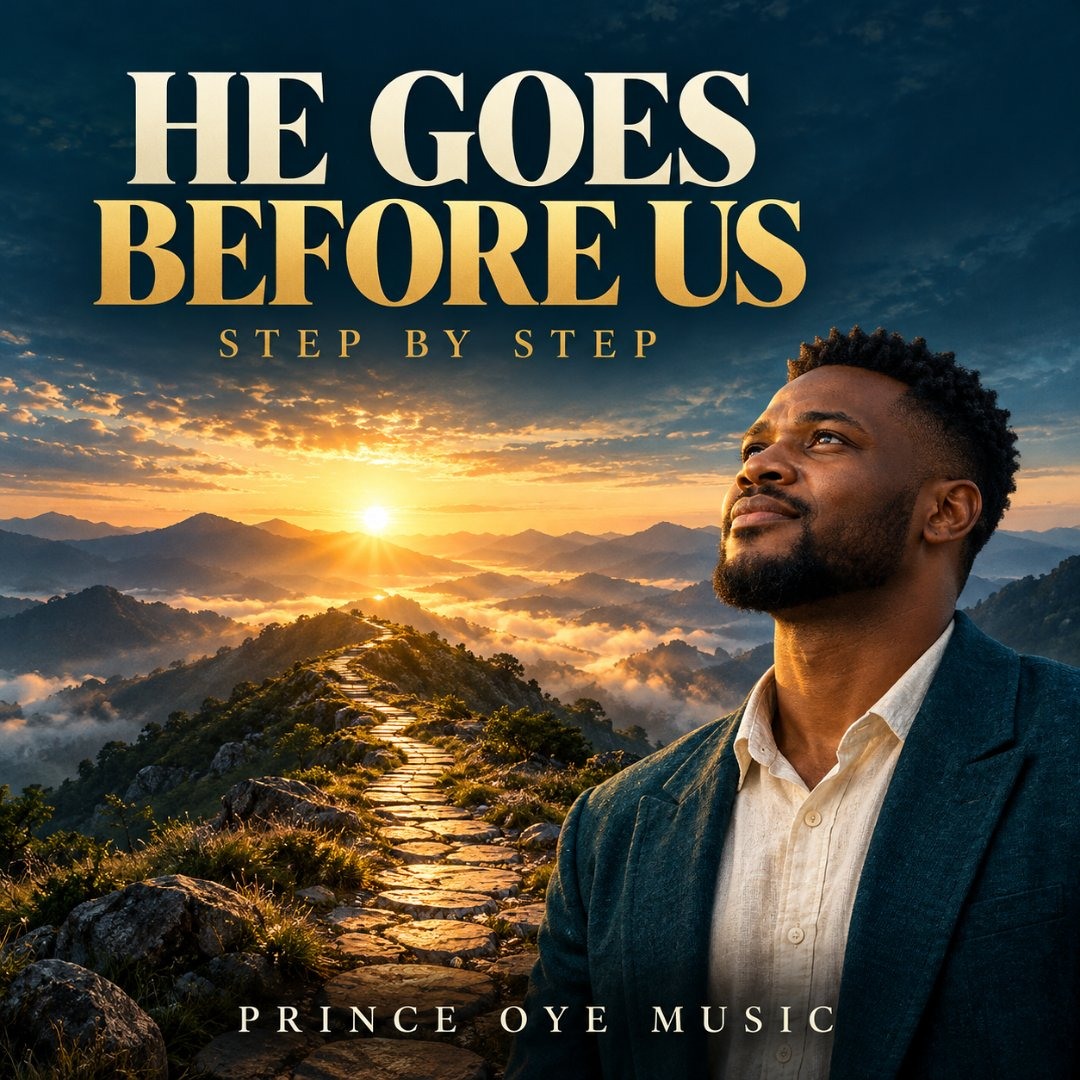
- He Goes Before Us (Step by Step) is described on its page as the guidance anthem for every season of "I don't know what's next, but I know Who's already there." It says He goes before you into every room, every meeting, every diagnosis and every decision. The title's thought, God going before His people, is the same promise as Deuteronomy 31:8 above.
- When I Cannot See the Way is peaceful gospel worship from the Deep Sleep Worship Music collection (Vol. 2) for quiet prayer and evening reflection.
Songs of trust
- I Will Trust is a slow gospel worship ballad about leaning on God when the road ahead is unclear and the answers do not come. The song page connects it to Proverbs 3:5.
- Trust In God is a worship song about holding on to God when life does not make sense, knowing He has never failed and never will.
- I Trust Your Heart is peaceful gospel worship for prayer, surrender and daily faith.
- The Name I Trust is an acoustic contemporary worship song about calling on the name of Jesus when worry takes a seat at your table. The song page quotes Proverbs 18:10, "The name of the LORD is a strong tower: the righteous runneth into it, and is safe."
Songs for the waiting
- Make A Way is a prayer asking God to make a way, and a promise to wait.
- Always On Time is a worship ballad for the waiting season about a God who is never late.
- Teach Me the Slow Way is a prayer for patience when you want answers right away.
Frequently asked questions
What is the best Bible verse for trusting God when you do not understand?
Proverbs 3:5–6 is the classic choice. John 13:7, "What I do thou knowest not now; but thou shalt know hereafter," and Isaiah 55:8–9 are also helpful for seasons when we cannot make sense of events.
How do I trust God when I am afraid?
Do what David did in Psalm 56:3–4: bring the fear to God and choose trust at the same time. You do not have to feel calm first. Pray honestly, take the next step you can see and ask a trusted friend to pray with you.
Is it wrong to ask God "why"?
No. The Psalms are full of honest questions, and God does not rebuke His people for bringing them. What the Bible warns against is turning away from Him. Bring your questions to Him, not away from Him.
How can I know what God wants me to do?
Pray, read scripture, seek wise counsel and look for peace and open doors as you take the next faithful step. No single method works every time, and God is patient with those who sincerely seek Him.
What should I do while I am waiting for an answer?
Keep doing what you already know is right: pray, serve, work faithfully, gather with other believers and worship. Waiting is not wasted time. It is often where trust is built.
A closing prayer
Lord, I cannot see the road, but You can. I am tired of trying to figure everything out on my own, so today I lean my weight on You. You have promised that You go before me, so I thank You that You are already in tomorrow. Give me light for the next step and the courage to take it. Where I am afraid, I will trust You. Where I do not understand, I will wait. Lead me, even without the map. Amen.
If you would like to keep worshipping, explore more videos from Prince Oye Music or read Deep Worship Songs for Prayer.